German Diplomat Applauds Ethiopia’s Market-Oriented Reforms for Boosting Investor Confidence - ENA English
German Diplomat Applauds Ethiopia’s Market-Oriented Reforms for Boosting Investor Confidence
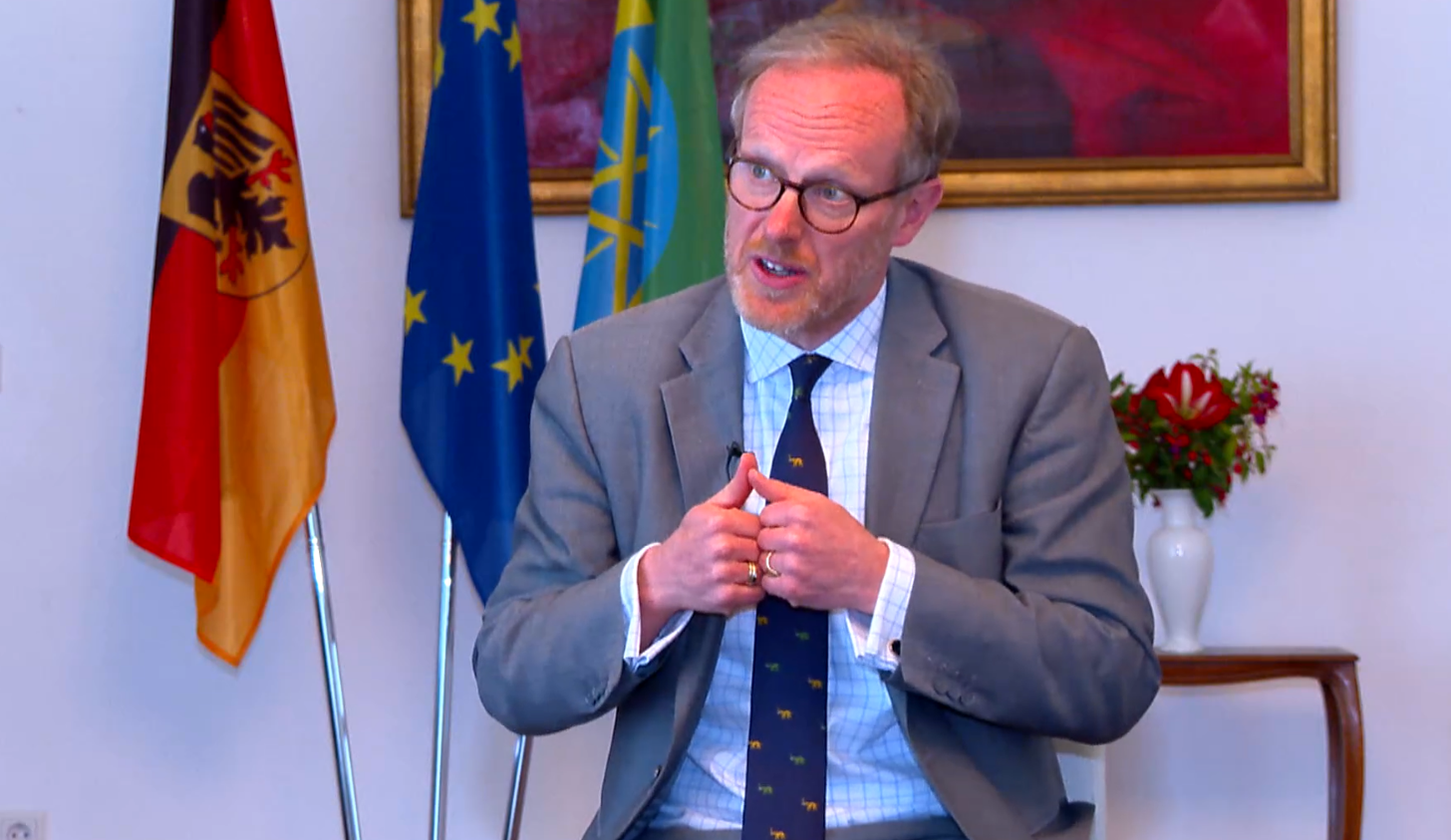
Addis Ababa, December 23, 2025—Ethiopia’s ongoing economic reforms are strengthening confidence among global investors as the country steadily advances toward a more market-oriented system, according to Ferdinand von Weyhe, Chargé d'Affaires of the German Embassy in Addis Ababa.
Weyhe said Ethiopia’s policy consistency is emerging as a decisive signal for foreign investments.
For him, continuity in reform efforts has played a critical role in shaping long-term investor confidence in the country
Ethiopia’s Homegrown Economic Reform program, launched in 2019, aims to correct macroeconomic imbalances, promote productivity, and support sustainable growth by stabilizing key indicators and opening major sectors to private and foreign investment.
The reforms signal a gradual shift toward a market-oriented economy while preserving a strong government role, and their continuity has boosted investor confidence and long-term international interest.
The continuity of the reform agenda is particularly encouraging for international partners and investors assessing long term opportunities in the country, Weyhe told ENA.
“We have seen consistent efforts to expand a market-oriented system, and Germany’s own experience shows that this approach is necessary,” he said.
According to him, such reforms create long term public benefits and lay the foundation for sustainable prosperity.
The chargé d'Affaires pointed to the country’s policy and structural changes demonstrate Ethiopia’s commitment to improving its investment climate.
These include the launch of the Ethiopian Securities Exchange, measures to attract foreign capital, progress in logistics performance, and the decision to open segments of the retail sector to foreign companies.
He further described these steps as clear indications of a gradual but steady shift toward a more competitive and open economy, noting that predictability and reform continuity matter as much as the reforms themselves.
At the same time, Weyhe stressed that further efforts are required to fully unlock the benefits of the reform process.
He said easing procedures, reducing bottlenecks, and allowing markets to function more efficiently would be critical to sustaining investor confidence and accelerating growth.
Logistics and customs reforms were highlighted as priority areas for improving Ethiopia’s global competitiveness.
According to Weyhe, inefficiencies in freight forwarding and border procedures directly affect the ability of Ethiopian firms to compete internationally.
“If a company in Ethiopia wants to compete on the world market, it is very important to improve the speed and quality of freight forwarding,” he said, emphasizing that logistics performance is a decisive factor for export driven growth.
He also underscored Ethiopia’s strong potential in green and renewable energy, describing it as a strategic advantage in an increasingly sustainability focused global economy.
“Green energy can become a strong brand for Ethiopia in the global market,” he said, adding that access to clean and affordable energy could enhance competitiveness across multiple sectors.
Weyhe identified textiles, agriculture, logistics, and information technology as areas with significant growth potential, particularly if reforms continue and are complemented by improvements in infrastructure, skills development, and regulatory efficiency.
His remarks reflect growing international interest in Ethiopia’s reform agenda, as policymakers seek to balance economic liberalization with stability, job creation, and inclusive growth.