Global South Must Achieve Sovereignty in Education, Culture, Technology: OSC SG Mussallam - ENA English
Global South Must Achieve Sovereignty in Education, Culture, Technology: OSC SG Mussallam
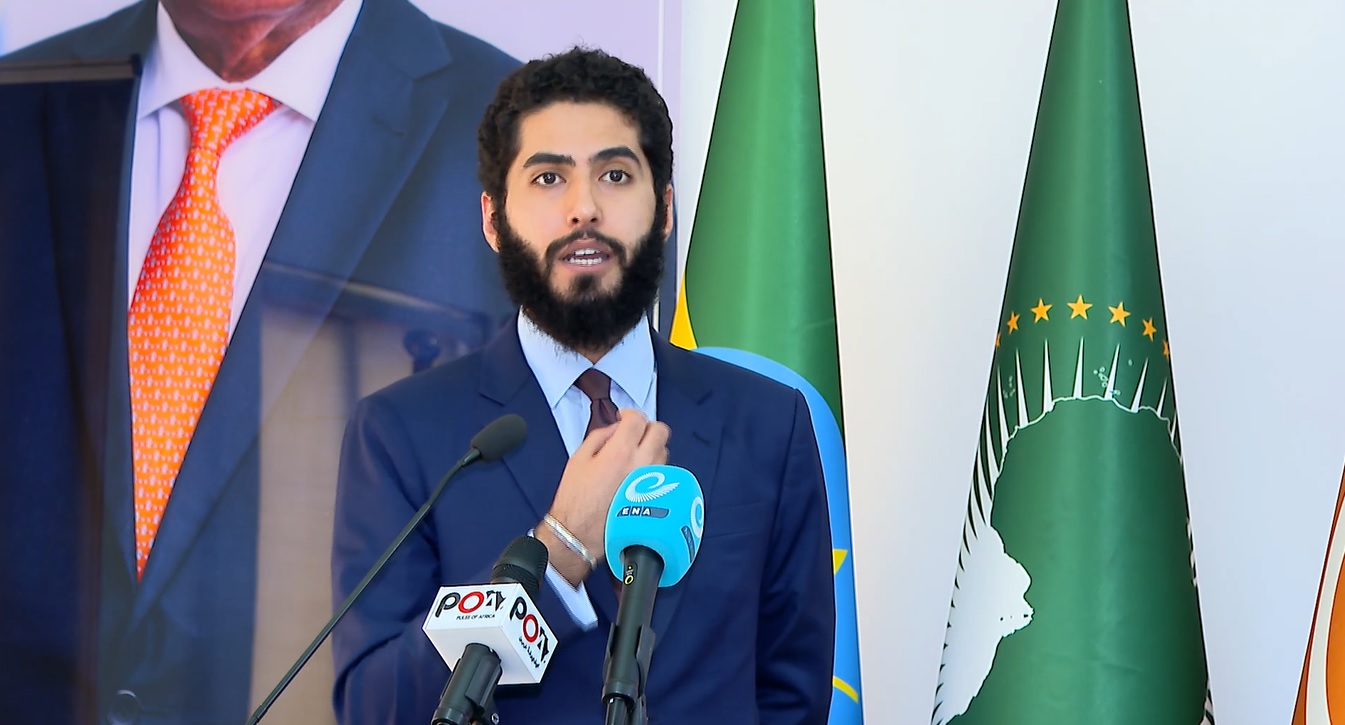
Addis Ababa, December 17, 2025 (ENA) —The Global South must achieve sovereignty of education, culture, and technology, among others, Organization of Southern Cooperation (OSC) Secretary-General Manssour Bin Mussallam said.
Speaking at the Institute of Foreign Affairs' Fireside Chat titled, “A Third Way: The Greater South Amidst Global Disorder,” OSC Secretary-General, Manssour Bin Mussallam emphasized the critical importance of sovereignty for countries in the Global South, emphasizing control over knowledge, culture, technology, and resources.
In this regard, the Secretary-General proposed the imperative necessity of building a third way of development from the Global South by the Global South, yet for the entire humanity.
According to him, the stalks of inseparable sovereignties, including education, culture, technology, health resources, food , energy, etc.
In terms of educational sovereignty, he advocated for curricula and narratives that reflect local histories, contributions, and indigenous knowledge systems of the Global South.
“We must achieve educational sovereignty by revising our curricula to better reflect our contribution to the world civilization; to prepare our youth for the complexity of the world through trans-disciplinary approaches and contexts that respond to national priorities, local realities and individuality of our students,” Mussallam explained.
Countries of greater South need to also achieve cultural sovereignty in their contextual realities, he added.
“We must also achieve cultural sovereignty in the context of our greater South; because our cultures have often been reduced to folklore, to the dances and music of the past. We must be rooted in our past informed by our past, and must honor our past. But, the truth is that there is no culture without our peoples; and our peoples are not stagnating in the past. They are living, evolving and growing.”
The Secretary-General noted that technological sovereignty would enable developing countries to control innovation, production, and research priorities rather than relying on external powers.
Moreover, he advocated for health and vaccine sovereignty, addressing inequities in access, storage, and representation in global research agendas.
Mussallam further urged for food and energy sovereignty, including local control over agricultural systems and renewable energy production, with a focus on protecting communities and resources.
“To do so, we must first become capable as countries of the greater South, articulating the long-term vision of the world we want to build or the architecture that we seek to achieve because without vision there can be no mobilization, and without mobilization there can be no transformation,” he elaborated.