How Addis Ababa Is Redefining Africa: Insights from Oumou Sangaré - ENA English


How Addis Ababa Is Redefining Africa: Insights from Oumou Sangaré
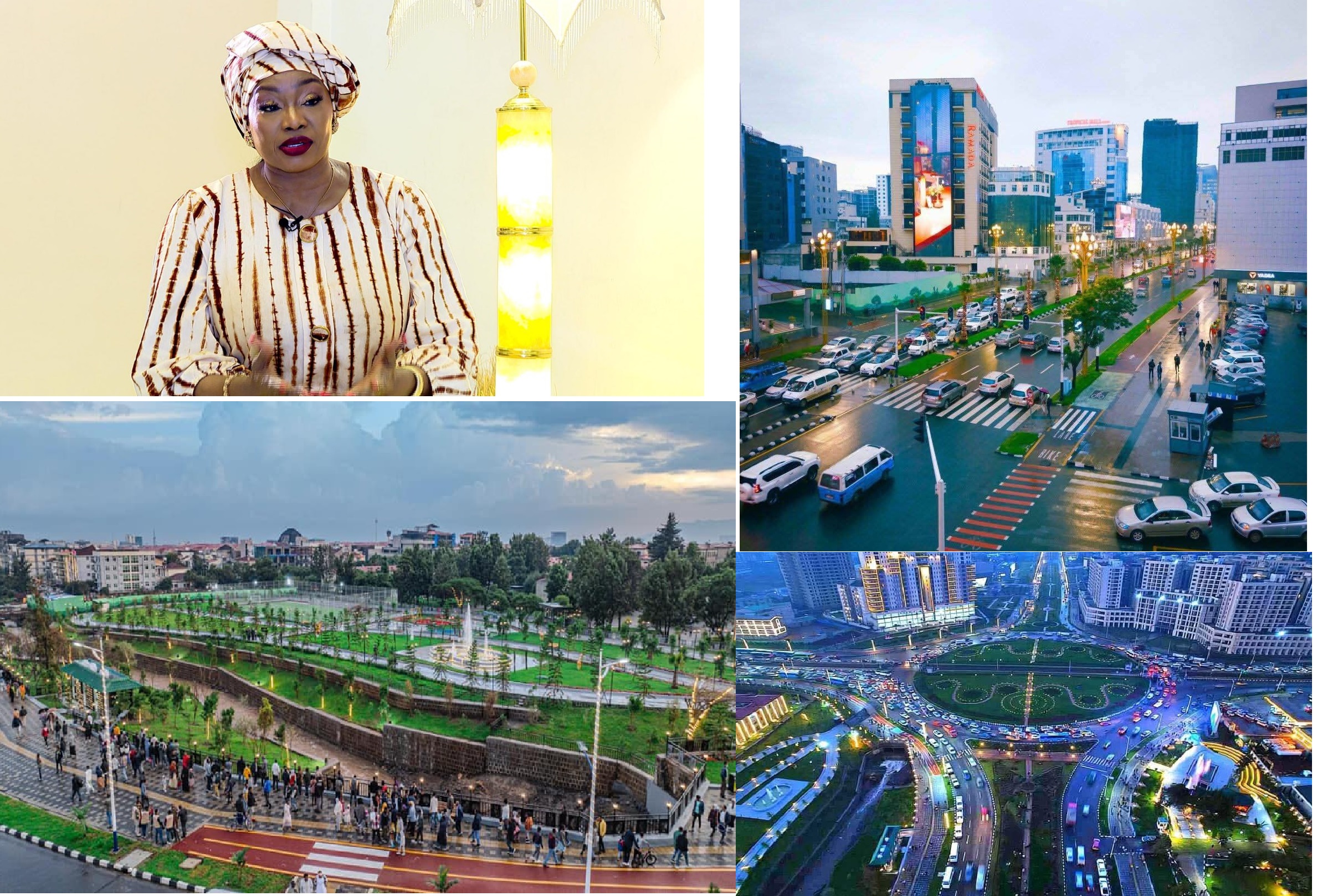
When Oumou Sangaré—the globally celebrated Malian artist and a lifelong advocate for African culture and women’s empowerment—recently visited Ethiopia, she was struck by the unprecedented transformation of Addis Ababa, the political capital of Africa.
She found a city reinventing itself, where modern infrastructure meets historic neighborhoods, vibrant public spaces reshape daily life and a renewed confidence defines its identity.
Her reaction captured more than personal surprise. It reflected a broader moment in which Addis Ababa is challenging expectations and signaling a new chapter in Africa’s urban and cultural narrative.
Oumou Sangaré, born in Bamako, Mali (1968), is the "Songbird of Wassoulou," a Grammy-winning Malian singer known for powerful vocals and lyrics addressing women's issues like forced marriage, blending traditional Wassoulou music with modern sounds.
Rising from humble beginnings—singing on the streets to support her mother—she became an international voice for African women, social justice, and cultural pride. Her music, spanning acclaimed albums such as Moussolou, Ko Sira, Timbuktu, and Mogoya, has earned her continental and global recognition, including a prestigious UNESCO International Music Award in 2001.
Against this background, Sangaré’s impressions of Addis Ababa carry symbolic weight. During her stay, she visited landmarks such as Entoto Park and various museums, spaces that reflect Ethiopia’s effort to merge historical identity with modern urban design. What stood out to her most, however, was the scale and pace of change unfolding across the city.
In recent years, the city, which also serves as the political capital of Africa, has embarked on an ambitious wave of infrastructure development and urban transformation.
Large-scale corridor projects, expansive green initiatives, upgraded transportation networks, and thoughtfully designed public spaces are reshaping the city’s landscape. Aging structures are giving way to modern high-rises, while redesigned sidewalks, illuminated public squares, and improved traffic systems are fostering a city that feels more connected, accessible, and visually cohesive.
For Oumou Sangaré, Addis Ababa’s transformation was so striking that she likened the experience to being in New York City—an observation that underscores how the city is beginning to defy long-held assumptions often attached to African capitals.
Her reflection points to a broader shift: Addis Ababa’s evolution is not merely infrastructural, but deeply symbolic.
As the diplomatic capital of Africa, the city has long stood as a symbol of political unity. Today, it is also positioning itself as a model of urban renewal, environmental responsibility, and cultural confidence. This evolution challenges outdated global narratives that portray African cities as static or underdeveloped, instead highlighting their dynamism, ambition, and capacity for reinvention.
Sangaré’s reflections extended beyond urban development into the cultural sphere.
She emphasized that African musicians, particularly the younger generation—carry a responsibility to present Africa to the world through art that is both innovative and grounded in research, history, and tradition. In her view, African music possesses an inherent richness that must be expressed deliberately, drawing from the continent’s diverse cultural heritage rather than mimicking external trends.
Her message resonates powerfully with Ethiopia’s current moment.
As Addis Ababa modernizes, it faces the delicate challenge of embracing global standards while safeguarding cultural authenticity. Sangaré’s call for art that reconnects young creators with their roots mirrors the city’s own balancing act: modernization without cultural erasure.
Eventually, Oumou Sangaré’s experience in Addis Ababa is more than a celebrity observation. It is a cultural affirmation of transformation guided by vision, identity, and purpose.
Her “beyond expectation” reaction signals how cities like Addis Ababa are not only changing physically, but also redefining how Africa is seen, heard, and understood on the global stage.


