Building National Cohesion Fit for Generations of Tomorrow - ENA English
Building National Cohesion Fit for Generations of Tomorrow
Yordanos D.
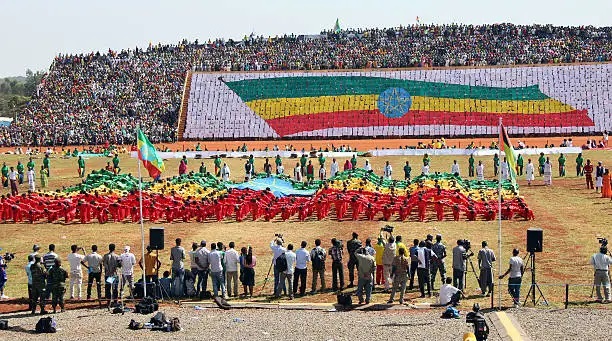
Addis Ababa, December 12, 2025 (ENA) — The Government of Ethiopia has designed and consistently reinforced the Nations, Nationalities, and Peoples’ Day (NNPD) celebrated annually on December 8th or 9th.
The day stands as the cornerstone of modern Ethiopia’s political identity. This national holiday is not merely a ceremony but an annual reaffirmation of the country's federal structure and its deep-seated commitment to building national unity through diversity.
As demonstrated by the recently celebrated 20th Nations, Nationalities, and Peoples’ Day under the theme “Democratic Consensus for Multinational Unity”, the significance of the national holiday lies in its comprehensive contribution to the Ethiopian people across four key areas: affirmation of equality, strengthening national cohesion, fostering development, and reinforcing constitutionalism.
NNPD's most profound contribution is the institutionalization of equality among the nation’s more than 80 ethnic communities. Historically, the day marks a democratic pivot from centralized control to a federal system that recognizes diversity as a source of strength. The celebration highlights the constitutional promise of equal rights, tolerance, and harmony.
Furthermore, this commitment goes beyond political representation, encompassing cultural rights. NNPD guarantees the right of every group to speak, write, and develop its own language, and to express and promote its unique culture and history, thereby overturning historical policies that prioritized certain identities.
As noted by the House of Federation Speaker, Agegnehu Teshager, “The Nations, Nationalities and Peoples' Day has contributed toward strengthening national unity, federal values, and shared progress.” Consequently, the occasion provides an opportunity to showcase Ethiopia’s diversity within a framework of national unity where all identities are regarded with equal respect.
In connection with promoting unity in diversity, the annual festivities serve as a powerful engine for national cohesion. By showcasing the rich cultural tapestry through various performing arts, traditional attire, music, and dance from across the country, the celebration actively promotes intercultural understanding. It is a forum designed to encourage people to learn about one another, build trust, and strengthen the culture of tolerance and mutual respect.
Prime Minister Abiy Ahmed emphasized this collective spirit, describing Ethiopia as a "grand library which contains a diverse collection of books with diverse knowledge, values, wisdom, cultures, history, art, and other assets." The message is clear: unity is achieved not by uniformity, but by shared commitment. Thus, the day contributes significantly to strengthening national unity and shared progress, confirming that unity within diversity is maintained as a source of national strength.
Beyond cultural identity, NNPD is framed as an occasion for the Ethiopian people to forge strong cooperation and reaffirm their commitment to joint efforts in ensuring development and working towards national prosperity. The holiday is strategically utilized as a tool for economic mobilization; for instance, the rotation of the national celebration to different regional cities each year serves as a catalyst for the host region's development, spurring infrastructure expansion and investment growth.
Moreover, the political discourse surrounding the event, as voiced by Prime Minister Abiy, focuses on a collective purpose: working "together like a woven fabric to build an Ethiopia fit for the generations of tomorrow." Leaders urge citizens to focus on Ethiopia’s potential, not just its problems, stressing that the country’s greatness is assured if its children stand together in strong unity.
Crucially, the NNP's Day serves as an annual renewal of the nation’s constitutional awareness and its commitment to a democratic order founded on the rule of law. It reinforces the federal principle of self-governance, linking the day to the rights of self-determination that allow groups to exercise a measure of autonomy and ensure equitable representation.
As noted by the House of Federation Speaker, Agegnehu Teshager, the country’s future depends on dialogue and cooperation. “Democratic consensus is not an option. It is the only way forward to ensure lasting peace and sustainable development in our multinational nation.” Therefore, the celebration is a practical exercise in strengthening federal values and promoting collective efforts for peace and nation-building.
In essence, the Nations, Nationalities, and Peoples’ Day is the public celebration of Ethiopia's multi-national federal structure, fundamentally redefining the relationship between the state and its diverse communities. It promotes equality and mutual cooperation as the necessary basis for national progress.
As the nation commemorates two decades of this landmark day, the central message remains unmistakable that Ethiopia’s strength lies in democratic unity. In other words, Ethiopia has remained committed to democratic unity in diversity in order to realize prosperity. By continuing to embrace its diversity and actively build consensus, Prime Minister Abiy Ahmed affirms, "Ethiopia will continue to be a model for Africa," demonstrating that constitutional commitment to its various peoples is the key to a shared and prosperous future.