Egypt’s Colonial-Era Claim Over Abbay/ Nile Lacks Legal Standing Under International Water Law – Scholars - ENA English
Egypt’s Colonial-Era Claim Over Abbay/ Nile Lacks Legal Standing Under International Water Law – Scholars
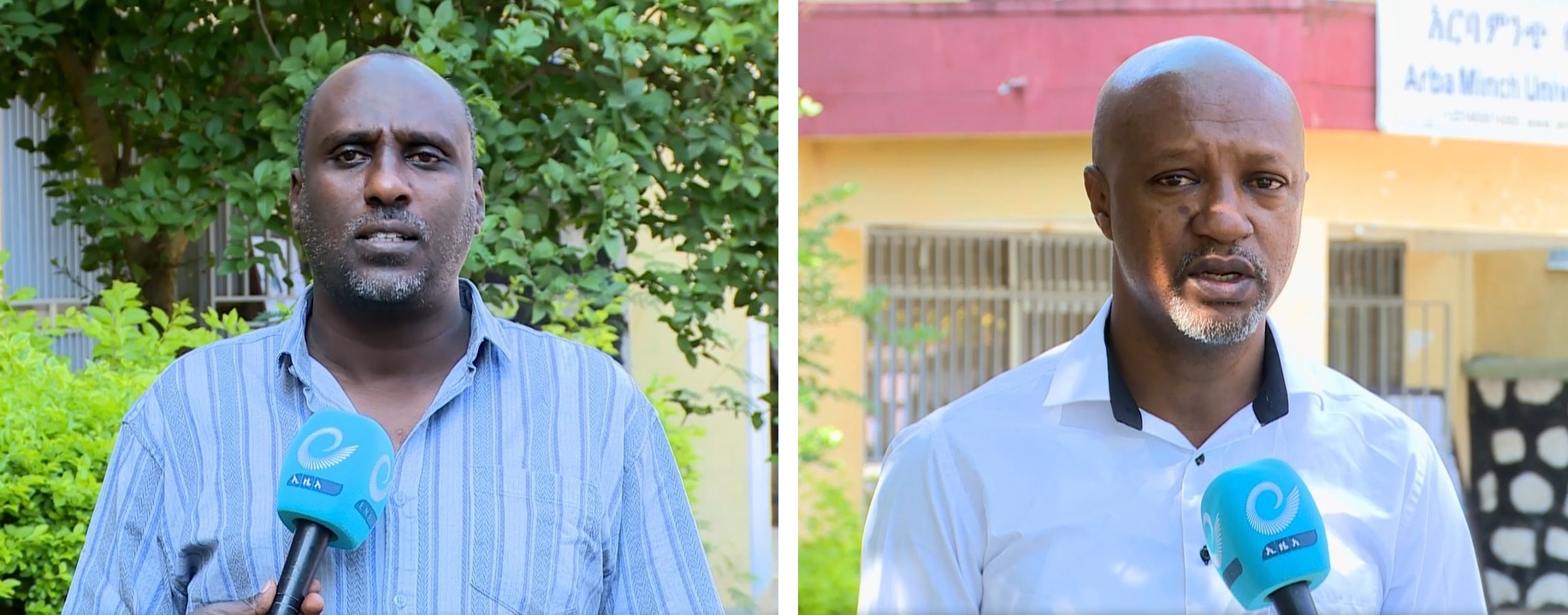
Addis Ababa, December 5, 2025— Scholars at Arba Minch University have stated that Egypt’s long-standing claim of exclusive ownership over the Abbay (Nile) River, rooted in a colonial-era mindset, lacks legitimacy under international water law and other accepted global legal standards.
The scholars emphasized that Ethiopia is the source of more than 86 percent of the Nile’s total water flow through the Abbay (Blue Nile), an undeniable hydrological fact that fundamentally challenges Egypt’s narrative of absolute control over the river.
Despite this reality, Egypt continues to maintain what the scholars describe as a misguided and outdated position, claiming that no country other than itself should have the right to decide on, or benefit from, the use of the Nile.
This colonial-style attitude, they noted, still shapes Egypt’s current policy toward the river.
In contrast, Ethiopia has consistently pursued a position based on fair and equitable utilization, grounded in respect for the shared interests of all Nile Basin countries.
This cooperative approach, the scholars stressed, is now widely recognized by the international community.
Ethiopian News Agency (ENA) spoke with experts from the Water Technology Institute of Arba Minch University regarding Egypt’s stance and Ethiopia’s legal and equitable approach to Nile utilization.
Dr. Engineer Tamiru Tessema, Scientific Director of the institute, explained that Egypt’s narrative surrounding the Nile is not only historically flawed but also incompatible with modern international norms.
He described Egypt’s continued insistence on this narrative as an agenda that no longer belongs to the present era and should not be raised in contemporary discourse.
He further noted that Ethiopia’s right to develop and utilize the river in a manner that does not cause significant harm to downstream countries is clearly protected under international law.
Yet, he said, Egypt’s true aim appears to be to keep Ethiopia as a passive observer rather than an active and rightful user of its natural resources.
For this reason, Egypt worked for years to obstruct the construction of the Grand Ethiopian Renaissance Dam (GERD), often acting in direct contradiction to international principles of transboundary water utilization.
Despite persistent destabilizing efforts, he said, the dam was completed through the unwavering resolve and collective sacrifice of the Ethiopian people.
However, even after the GERD reached full completion, Dr. Tamiru added, Egypt has continued what he described as hostile and destabilizing actions against Ethiopia.
He stressed that such conduct is entirely unacceptable and deserves firm condemnation.
Under international transboundary water law, he explained, countries have the right to reasonable and equitable use of shared rivers in a manner that does not inflict significant harm on downstream states.
Egypt’s objective, however, reflects absolute exclusivity, built on the idea that no other country should benefit from the Nile besides itself.
For this reason, the scholars reaffirmed that Egypt’s attempt to monopolize the Nile through a colonial narrative lacks acceptance under international law and recognized global norms.
They further stated that while Egypt’s rigid position directly undermines Ethiopia’s legitimate right to develop and use its natural resources, Ethiopia continues to follow a legally sound and internationally recognized path based on equitable utilization principles.
Dr. Elias Gebeyewu, Director of the university’s Water Resources Research Center, also stated that Egypt’s hardline stance on the Nile and the GERD reflects a colonial ideology that is outdated and unsuitable for the modern era.
He added that Egypt’s repeated actions to derail negotiations related to the GERD and to revive colonial-era thinking run directly against the realities of the 21st century.
In this regard, he recalled that the Ministry of Foreign Affairs of Ethiopia has made it clear that such persistent interference by Egyptian officials is incompatible with today’s global political and legal order.