Egypt’s Politicians Playing Victim in Nile Game to Mask Domestic Failures, Says Uppsala University Professor - ENA English
Egypt’s Politicians Playing Victim in Nile Game to Mask Domestic Failures, Says Uppsala University Professor
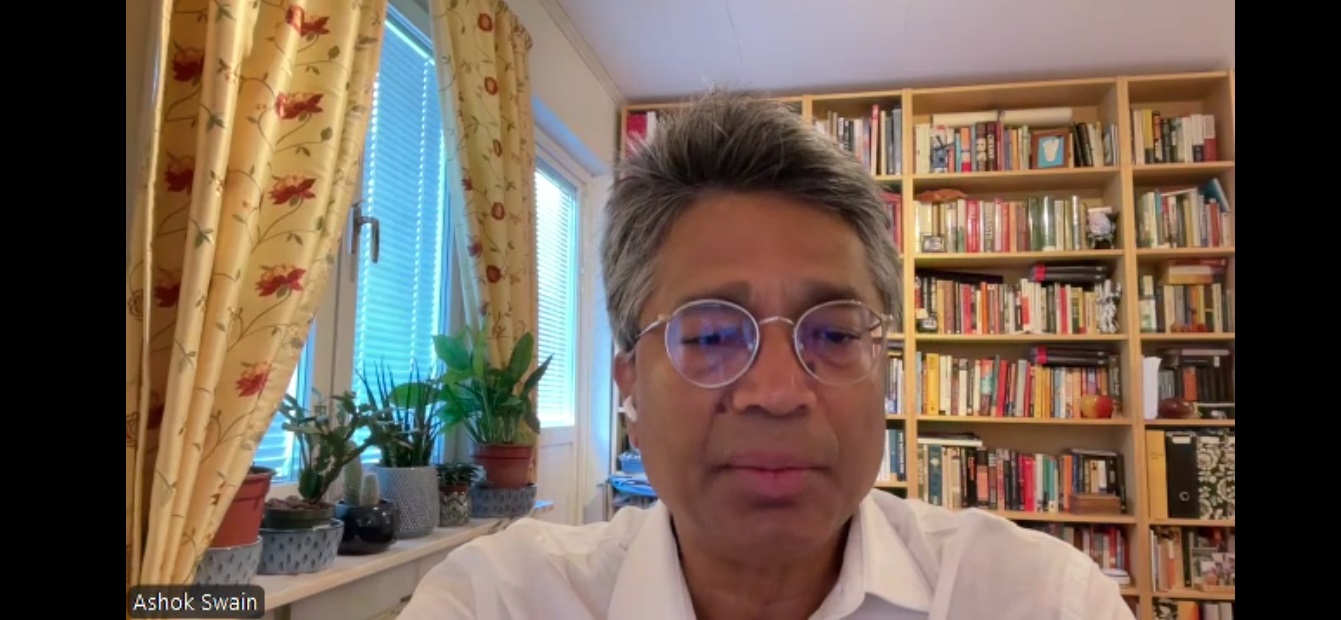
Addis Ababa, December 5, 2025— Some Egyptian politicians are “playing a losing game” over the Abbay (Nile) and Ethiopia’s Grand Renaissance Dam (GERD), using the issue mainly to deflect internal political pressures, said renowned scholar Ashok Swain, Professor of Peace and Conflict Research at Uppsala University.
Speaking to ENA, Swain, who is also UNESCO’s International Water Cooperation Chair, noted that Egyptian officials have continued to rely on an unfounded narrative, engaging in what he described as “saber-rattling” and misinformation against Ethiopia.
According to him, they are attempting to portray Ethiopia’s pursuit of sea access as a threat, rather than embracing mutual prosperity and cooperation.
He said Egypt is now trying to block Ethiopia’s rights of access to the sea in the same way as it did to stop Ethiopia from utilizing the Abbay/Nile waters.
In its latest statement, Ethiopia’s Ministry of Foreign Affairs dismissed Egypt’s refusal to engage in dialogue and its increasingly hostile rhetoric, saying Cairo’s posture reflects a deliberate attempt to provoke tension and engineer further escalation.
The ministry condemned Egypt’s stance in this regard as irresponsible, calling on the international community to denounce its behavior.
A country that contributes 86 percent of the total flow of the Nile, Ethiopia asserts that utilizing the Abbay River is within its sovereign rights.
The ministry also accused Egypt of pursuing a campaign in the Horn of Africa aimed at destabilizing Ethiopia and fostering weak, compliant client states to serve Cairo’s interests.
However, according to Swain, Egypt’s efforts are unlikely to succeed and will not bear fruit at the regional and international levels.
“Egypt has long accepted that the GERD is a reality,” he noted. “Despite occasional ‘saber-rattling’ by some Egyptian politicians, these statements are largely aimed at the domestic audience rather than reflecting a change in their understanding.”
According to the scholar, Egypt’s repeated complaints before the UN Security Council did not bring about any results it desired, and the Egyptian authorities are well aware that going to the UNSC did not and will not change anything concerning realities on the ground.
“The UN Security Council is deeply divided on this issue,” he said. “Even without divisions, China, using its veto power, would oppose any intervention on transboundary water management that does not favor upstream countries. China has a consistent policy that upstream nations have the right to use water resources, reflecting its own experience as an upstream country for much of Asia’s rivers.”
“Therefore, he said he believes it was all too natural for Egyptian politicians to make such statements for domestic audiences,” Aswin said, adding, “I don’t think they carry any real significance internationally, regionally, or even in terms of Nile River management.”
Commenting on Ethiopia’s regional stance, he noted that the country has achieved not only an engineering milestone with the construction and inauguration of the GERD, the largest dam in Africa, it has also marked a major diplomatic victory for the East African nation.
“Thus, Ethiopia’s diplomatic and regional standing is on the rise, while Egypt’s influence has waned,” he said.
He criticized Egypt for its attempts to deny Ethiopia access to a seaport, urging the North African nation to adopt a cooperative approach to Nile waters and collaborate in various sectors.
“The best possible path for both Egypt and Ethiopia is cooperation over the Nile,” he said. “Egypt is once again playing a losing game by trying to block Ethiopia’s access to the sea.”
There is a widely held sentiment in Ethiopia and beyond in the region that Egypt has for long been engaged in creating anti-Ethiopian alliances as Ethiopia continues to utilize the Abbay river for its development, and now as it launched an international diplomatic campaign to reassert its rightful place on the Red Sea – an outlet from which it was pulled back three decades ago via unjust, shady deals.