Ethiopia’s Green Legacy in the Eyes of Foreign Officials - ENA English
Ethiopia’s Green Legacy in the Eyes of Foreign Officials
By Gosaye Feyisa
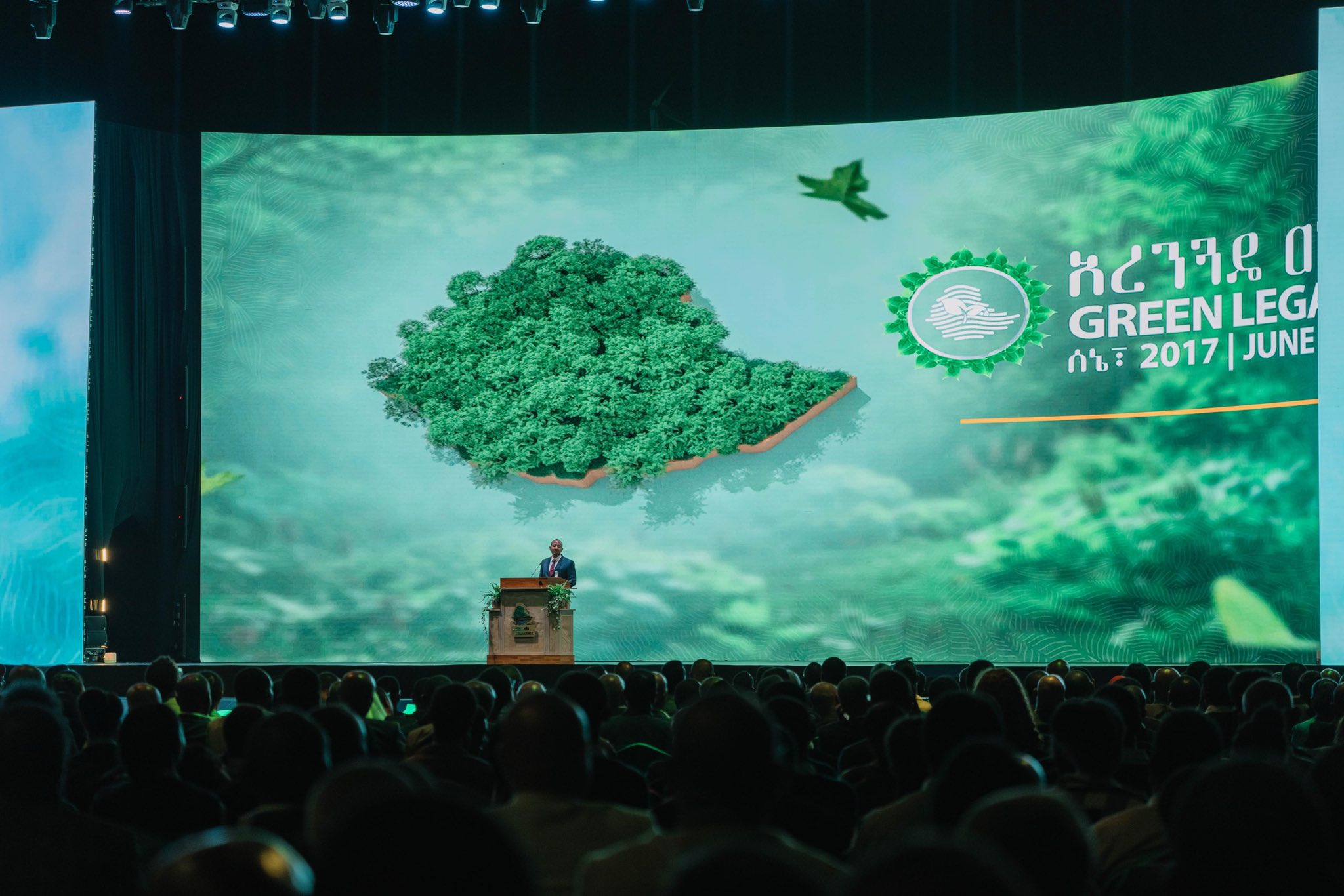
Launched by Prime Minister Abiy Ahmed in June 2019, Ethiopia’s Green Legacy Initiative (GLI) has grown into one of the world’s largest reforestation efforts. With over 40 billion seedlings planted and a target of 54 billion by 2026, the initiative is reshaping Ethiopia’s landscapes and setting a powerful example for environmental restoration, climate resilience, and food security across the continent.
In 2025 alone, Ethiopia targets the planting of 7.5 billion trees, continuing its nationwide mobilization involving government institutions, communities, youth, and international partners. Observers and policymakers increasingly recognize the initiative as a replicable model for African countries facing similar environmental threats.
Nigeria’s VP: Ethiopia’s Green Legacy Is a Blueprint for Africa
During a visit to Ethiopia in July 2025, Nigeria’s Vice President Kashim Shettima praised the Green Legacy Initiative as a bold and practical response to climate challenges, calling it a blueprint for Africa’s sustainable future. Speaking at the official launch of the 2025 campaign alongside Prime Minister Abiy Ahmed, Shettima noted Ethiopia’s remarkable progress and its aim to plant 7.5 billion seedlings this year alone.
He highlighted that the initiative—having already planted 40 billion trees and created hundreds of thousands of green jobs—is an example of visionary leadership and climate action. Applauding Abiy Ahmed as an inspiring reformer, Shettima urged other African nations to follow Ethiopia’s lead.
“The promise of Ethiopia’s Green Legacy is the dream of every nation. It is a lesson in vision, in purpose, and in audacity,” he said.
Ethiopia Leading Africa’s Green Revolution
Harsen Nyambe, Director of Sustainable and Blue Economy at the African Union Commission, called Ethiopia a beacon of hope. He emphasized that its large-scale tree-planting campaign supports the African Union’s Great Green Wall Initiative, which seeks to combat desertification in the Sahel and Horn of Africa.
“The Green Legacy of Ethiopia is a very good example… there are a lot of countries who want to do what Ethiopia is doing. But they do not have the know-how,” Nyambe noted, encouraging Ethiopia to share its expertise.
Ethiopia’s Green Legacy Initiative proves that with political will and community mobilization, even arid regions can be transformed into green, productive landscapes.
Youth Engagement: Securing Africa’s Environmental Future
The African Youth Conference for Peace became a landmark moment for youth-led environmental action. Delegates from Uganda, Burundi, and the Eastern Africa Standby Force participated in tree-planting efforts and committed to replicating Green Legacy back home.
Nkakaire Anthony, a youth from Uganda, shared: “One of the biggest lessons I am taking back home is ensuring every youth out there preaches the gospel of planting trees… The future of Africa is determined by what is happening in the current generation.”
This grassroots engagement highlights the power of youth leadership and environmental education for long-term climate resilience.
Regional Impact: The “Green Brotherhood” Grows
South Sudan’s Ministry of Environment Undersecretary, Joseph Africano Bartel, noted that Ethiopia has provided saplings to South Sudan and Djibouti under the “Green Brotherhood” initiative. He stressed the urgency of adopting such strategies across the region to tackle climate change, secure food systems, and promote sustainable agriculture.
“The effects of the environment will not wait for us… we must exploit and manage our natural resources in a sustainable manner,” Bartel said.
Andres Gulwak of South Sudan praised Ethiopia’s integration of agriculture and reforestation: “Ethiopia has invested a lot in agriculture… it’s up to us, the neighboring countries, to adapt this.”
Global Recognition and Climate Leadership
International leaders have lauded Ethiopia’s efforts. Portuguese Foreign Minister João Gomes Cravinho encouraged others to emulate the GLI model, while the UNFCCC’s Least Developed Countries Expert Group (LEG) recognized GLI’s role in climate action.
“Afforestation is a key climate action. Ethiopia planting 600 million trees in a single day is huge. It is a good, worth-emulating initiative,” said LEG Chair Gabriel Kapaka.
Linus Mofor of the UN Economic Commission for Africa emphasized GLI’s importance for strengthening hydropower systems and boosting food security through diversified tree planting, including fruit and cash crops.
Food Security and Agricultural Transformation
Ethiopia’s Green Legacy is closely tied to its broader agricultural transformation strategy. At the 2024 World Without Hunger Conference, leaders from Sierra Leone and Guinea praised Ethiopia’s achievements in agricultural reform and wheat production.
Sierra Leone’s President Julius Maada Bio noted: “Ethiopia now exports wheat… that is a phenomenal job.”
Guinea’s Prime Minister Mamadou Oury Bah stressed that the Green Legacy Initiative not only enhances climate resilience but also creates jobs for youth. He pledged to replicate Ethiopia’s approach, particularly in reforesting Guinea’s Fouta Djallon highlands—a critical water source for over 15 African countries.
Key Lessons for African Nations
Ethiopia’s Green Legacy provides key lessons for climate action and sustainable development across Africa. It shows the power of strong political will, mass mobilization, and youth engagement. By sharing knowledge, investing in drylands, integrating agroforestry with farming and uniting for climate finance, African nations can build a greener, more resilient future.
In conclusion, Ethiopia’s Green Legacy is more than a tree-planting campaign—it’s a model for climate resilience, sustainable development, and African unity. As more nations express interest in adopting similar programs, Ethiopia is poised to lead a continent-wide green transformation.