New Ethiopia against Old Shadows - ENA English
New Ethiopia against Old Shadows
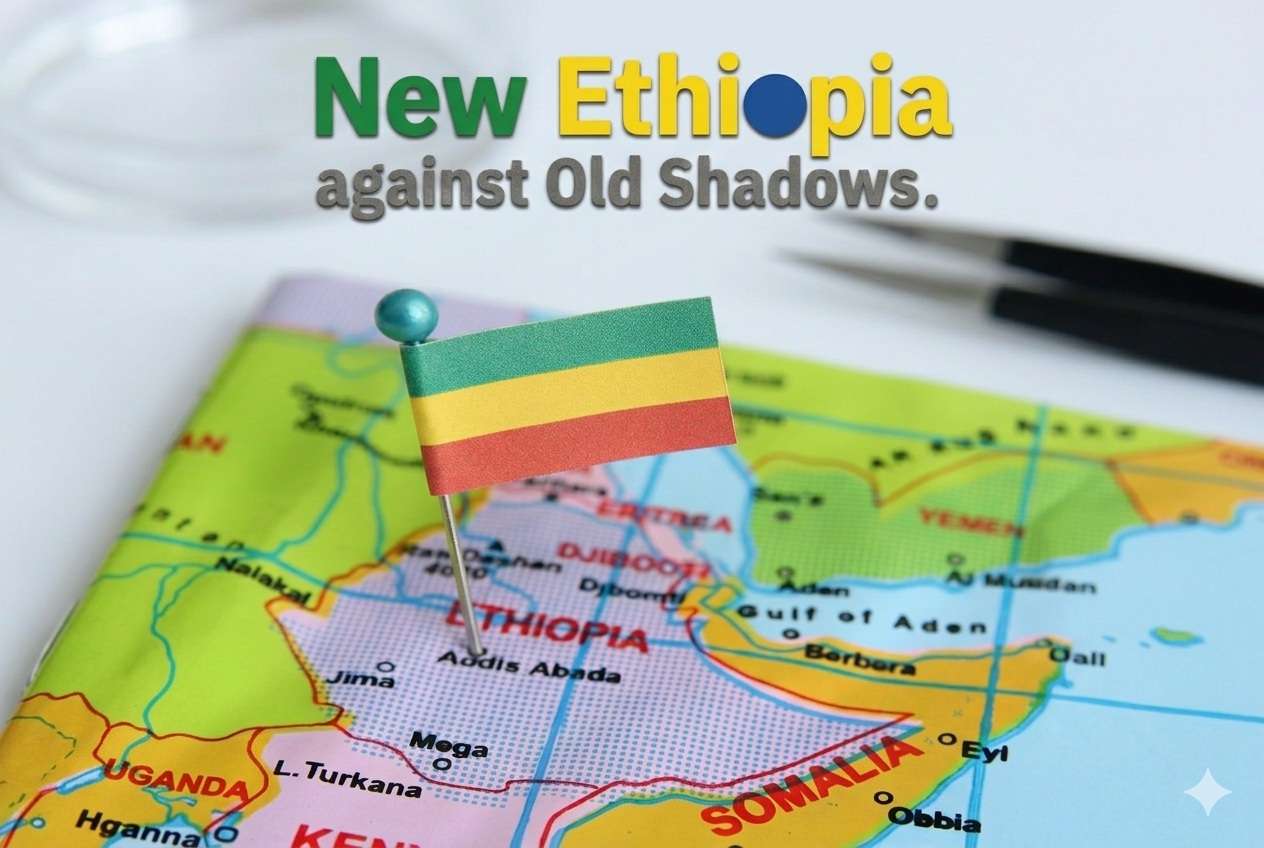
Addis Ababa, May 24, 2026 —The government and people of Ethiopia are shaping a transformation unlike anything seen in the country’s modern history. While the government advances large scale projects aimed at accelerating economic growth and national prosperity, many young Ethiopians are turning creativity into opportunity through innovation and self-determination.
Using discarded fabric, rubber, metal, leather, and other recycled materials, young creators are producing fashion, digital art, and new industrial designs. Most of them have neither political connections nor inherited wealth. Many receive little institutional support. What they possess instead is creativity, resilience, and access to digital platforms through their smartphones. For many observers, these young innovators alongside the country’s modernization efforts represent a new generation of nation builders.
This momentum extends beyond Ethiopia’s borders. As one of the largest and most influential countries in East Africa, developments in Ethiopia increasingly shape the direction of the wider region. Young innovators are helping create a technology driven and interconnected future that reflects the aspirations of millions across the Horn of Africa. At the same time, government investments in industrial parks, digital innovation, transport corridors, renewable energy, urban development, and startup ecosystems are expanding opportunities for entrepreneurship and regional economic integration.
These reforms are gradually positioning Ethiopia as an emerging hub for manufacturing, logistics, technology, and green development on the African continent.
In contrast, another political current remains rooted in decades of armed struggle and ideological confrontation. Some older political actors continue to frame national politics through the language of division, grievance, and power rivalry. Their political outlook often remains tied to the conflicts of the past rather than the opportunities of the future. Critics argue that while they speak of unity when in power, their rhetoric shifts toward instability and polarization when influence declines.
Many analysts describe this as Ethiopia’s modern paradox: one generation attempting to build opportunity from limited resources while another risks undermining that progress through resentment and confrontation. Because Ethiopia plays a central role in regional stability, its internal direction carries consequences far beyond its borders. The debate is no longer only about domestic politics. It has become a broader struggle between innovation and stagnation, integration and fragmentation, hope and political bitterness.
This contrast is increasingly visible in Ethiopia’s expanding infrastructure network, improving transport and aviation connectivity, digital transformation programs, agricultural modernization, and clean energy initiatives designed to reduce poverty while strengthening regional cooperation.
Across the country, Ethiopians from different backgrounds continue to aspire to peace, stability, and economic progress. At the center of this generational transition are young creators such as the online artist known as “Kalu Putik,” who transforms ordinary and discarded materials into valuable works of art and fashion.
Kalu did not emerge from elite institutions or wealthy circles. Rather than waiting for government assistance or corporate sponsorship, he built his own path through persistence and imagination. In a world where African youth are often portrayed merely as consumers or aid recipients, he demonstrated that creativity itself can become a powerful form of capital.
Through platforms such as TikTok, Instagram, and Telegram, he attracted millions of followers and transformed himself from a local artist into part of the global creative economy. His rise also reflects a broader national environment shaped by expanding internet access, digital payment systems, youth focused economic reforms, and growing investment in Ethiopia’s creative sector.
The Old Guard
Ethiopia’s older political generation stands far removed from the world of digital innovation and youth driven creativity. Many figures within this political class spent decades inside governments, armed movements, and ideological organizations. Yet experience alone does not guarantee wisdom or integrity. Without moral responsibility and vision, long political experience can become a burden rather than a strength.
This problem also extends into the wider politics of East Africa. For decades, regional politics have often been shaped by proxy conflicts, political suspicion, and zero-sum competition. Instead of prioritizing trade integration, shared infrastructure, and collective security, some political actors remain trapped in the disputes of the twentieth century, including the legacy of monarchy, military rule, and ethnic conflict.
While much of the world is moving toward technological innovation and economic integration, these outdated political approaches continue to interpret regional relations through unresolved grievances and division. In contrast, Ethiopia’s current development trajectory increasingly emphasizes economic diplomacy, regional trade connectivity, cross border infrastructure, and energy cooperation as foundations for long term stability and growth.
The Destructive Mindset
Despite ongoing efforts toward inclusive development and modernization, a recurring challenge continues to shape Ethiopian politics. Some political groups praise national unity and development when they hold influence, yet quickly shift toward confrontation and destabilization when they lose political ground.
As a result, major national projects including economic reforms, corridor development, digital modernization, tourism expansion, and environmental initiatives are frequently targeted by campaigns aimed at discrediting progress. Nevertheless, Ethiopia has continued advancing large infrastructure projects, modernizing cities, expanding tourism destinations, improving electricity access, strengthening agricultural productivity, and implementing internationally recognized environmental restoration programs.
Political disagreement is natural in any society. However, analysts warn that cooperation with external forces seeking instability crosses the boundary between legitimate opposition and actions that undermine national interests is really unacceptable.
Disinformation campaigns, efforts to weaken investor confidence, and attempts to inflame unrest have become part of this broader struggle. Yet the country continues attracting investment in infrastructure, manufacturing, aviation, energy, telecommunications, and tourism while strengthening its position as one of Africa’s rapidly transforming economies.
Observers also note that some foreign actors view a self-sufficient and industrializing Ethiopia as a challenge to existing geopolitical balances. Consequently, internal tensions are sometimes exploited to obstruct strategic national projects, particularly Ethiopia’s pursuit of equitable use of natural resources and reliable access to maritime trade routes.
Despite such pressures, the Grand Ethiopian Renaissance Dam has emerged as a symbol of national sovereignty, African self-reliance, and regional economic potential. The project is expected to provide clean energy to millions while supporting industrialization and economic integration across East Africa.
At the same time, local conflicts and historical grievances are often manipulated for political advantage, deepening instability and social mistrust. Peace remains fragile. Building trust between communities requires generations of effort, yet it can be damaged quickly through violence and hate driven narratives.
In response, government initiatives focused on education, technical training, digital literacy, startup incubation, and youth employment aim to redirect the energy of younger generations toward innovation and productivity rather than conflict.
Analysts warn that political manipulation and violence risk depriving both Ethiopia and the wider East African region of the talent needed for technological advancement, industrialization, and regional integration. Much of the political discourse still operates through ideological frameworks rooted in the 1960s and 1970s, dividing society into permanent enemies and limiting economic progress.
Modern Ethiopia, however, increasingly seeks to embrace innovation driven governance, digital transformation, renewable energy expansion, smart urbanization, and regional economic cooperation as the foundation for long term prosperity.
Conclusion
Ethiopia is passing through a defining historical moment shaped by creativity, resilience, and national renewal. Many young Ethiopians are beginning to reject the politics of hatred and division, recognizing that building opportunity carries greater value than destroying communities over historical grievances.
Figures such as Kalu Putik represent a generation that sees possibility where others see limitation. They demonstrate that Ethiopia’s greatest resource is not buried underground or controlled by political elites, but found in the imagination, energy, and determination of its youth.
Despite external pressures, internal tensions, and periodic political crises, Ethiopia continues pursuing a broader vision of reducing poverty and achieving sustainable development. The momentum created by millions of forward-looking young people is becoming increasingly difficult to reverse.
Large infrastructure projects, economic reforms, renewable energy expansion, industrial parks, digital governance systems, tourism development, agricultural modernization, and environmental restoration programs all point toward a long-term transformation. As Ethiopia strengthens its role as a regional anchor, its progress could become a driving force for greater integration, connectivity, and stability across the Horn of Africa.